
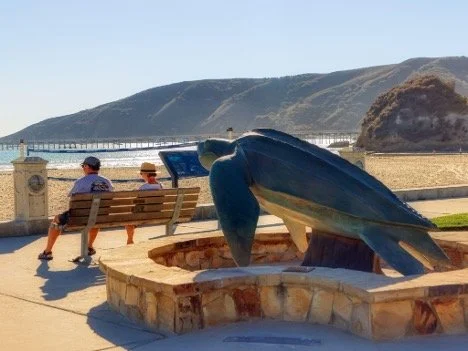
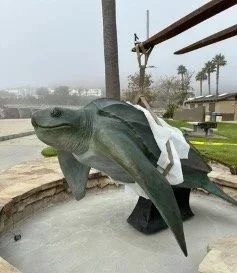
While the leatherback sea turtle holds the distinction of being California’s official state marine reptile, many residents are unaware that these prehistoric giants visit West Coast waters to forage on abundant jellyfish. To bridge this gap in public awareness, Upwell and partners installed a life-sized bronze sculpture of a swimming male leatherback at the Avila Beach waterfront, offering visitors a unique opportunity to come face-to-face with one of the ocean's most enigmatic species.
Bringing an 8-foot sculpture into existence is no small feat. The design process started with artist Pamela Blotner and a piece of paper. Pamela sketched her vision on paper, attentive to the physiological features and dynamic movements of leatherbacks in marine environments. Once she had a working sketch ready to translate into a maquette (a small-scale model of the sculpture), Pamela invited artistic collaborator John Pearson to help create a wood and metal framework on top of which she could sculpt the leatherback’s features with clay. Two major challenges were aligning the sculpture’s proportions with the dimensions of real leatherbacks and supporting the turtle’s relaxed posture in his natural marine environment.
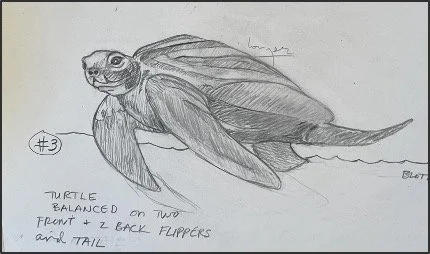
Pamela drew on photos and her own memories from leatherback nesting beaches in Costa Rica to bring the turtle to life. She and John designed the leatherback for Avila Beach in a swimming pose, since the installation site is adjacent to federally designated critical foraging habitat for leatherbacks. “It had to look as though it was actually in the ocean, but also that it was not too fanciful,” she remarked “That just meant studying the anatomy more and more. It was very difficult making him look as though he was swimming, and not just swimming but maybe noticing the environment around him and being happy in his environment.”
When Pamela and John finished their maquette, Artworks Foundry in Berkeley used it to create a 3-D model from which molds were made to cast the sculpture in bronze. The Artworks team carefully poured molten bronze into the molds for each leatherback piece, welded the sculpture together and buffed the bronze to a shine.
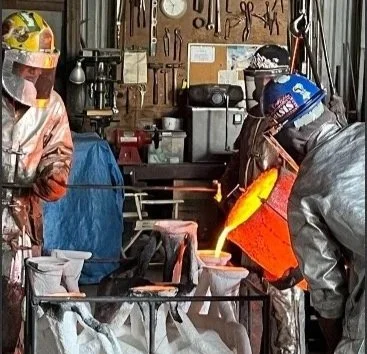
Photos by John Pearson
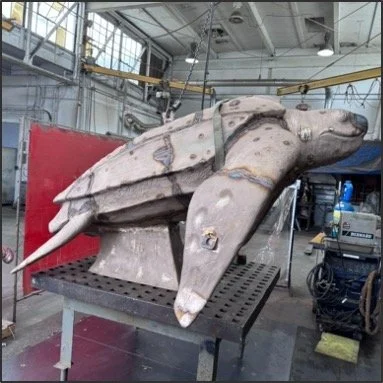
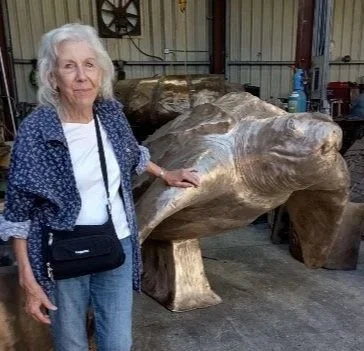
Then Artworks asked Pamela and John to choose a patina. Over time, bronze sculptures naturally develop a patina—a subtle, colored outer layer formed through oxidation that often takes on a characteristic bluish-green hue, much like the Statue of Liberty.
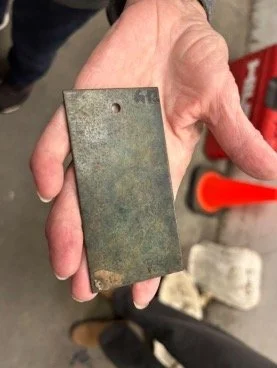
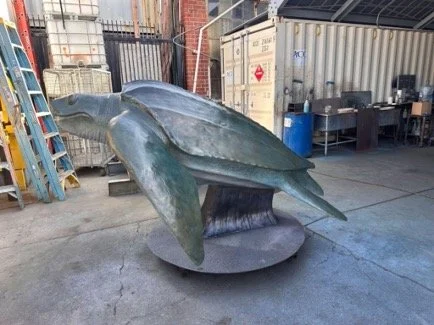
Foundries often achieve this look on a faster timescale by using a torch to intentionally color sculptures through controlled chemical reactions accelerated with heat. Once Artworks applied the final patina, the sculpture was ready for Avila Beach.
Photos by Stephanie Rowe
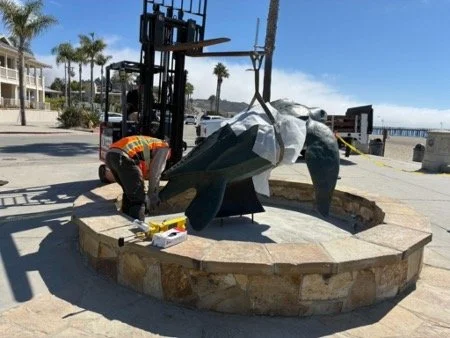
The massive sculpture was installed at Avila Community Park and commemorated with a ribbon-cutting ceremony on October 15th in celebration of Pacific Leatherback Conservation Day. The event welcomed the new landmark to the Avila Beach community while rallying support for marine conservation. District 3 Supervisor Dawn Ortiz-Legg said, "San Luis Obispo County is thrilled to welcome this beautiful Leatherback Sea Turtle sculpture to Avila Community Park. This meaningful addition will enhance the park while providing an engaging opportunity to educate both residents and visitors about California's official state marine reptile."
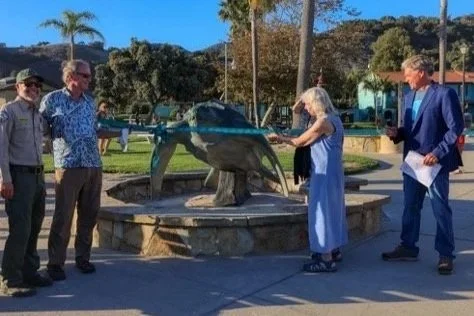
Photos by Caron Krauch / SloCoastPix
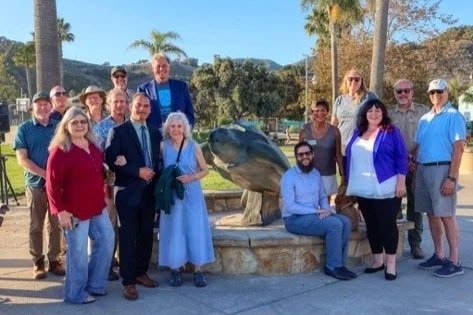
This creation of the sculpture was spearheaded by Upwell, with major support from the Swift Family, the Avila Beach Tourism Alliance and the Avila Beach Community Foundation, along with generous anonymous donors. The installation was made possible through partnerships with San Luis Obispo County Parks and Recreation, Central Coast Aquarium, Artworks Foundry, Gaia Graphics Design and the Urena-Elenes Family.
Photo by Caron Krauch / SloCoastPix
Educational signage installed near the sculpture explains how these leatherbacks migrate over 7,000 miles from nesting beaches in the tropical West Pacific to the California coast, arriving between June and November to feast on seasonal jellyfish prey. This long journey exposes them to significant human-caused threats, including entanglement in fishing gear, vessel strikes, and the ingestion of marine plastics. With the West Pacific population critically endangered and as few as 1,500 mature individuals remaining, every conservation effort is vital to their survival.
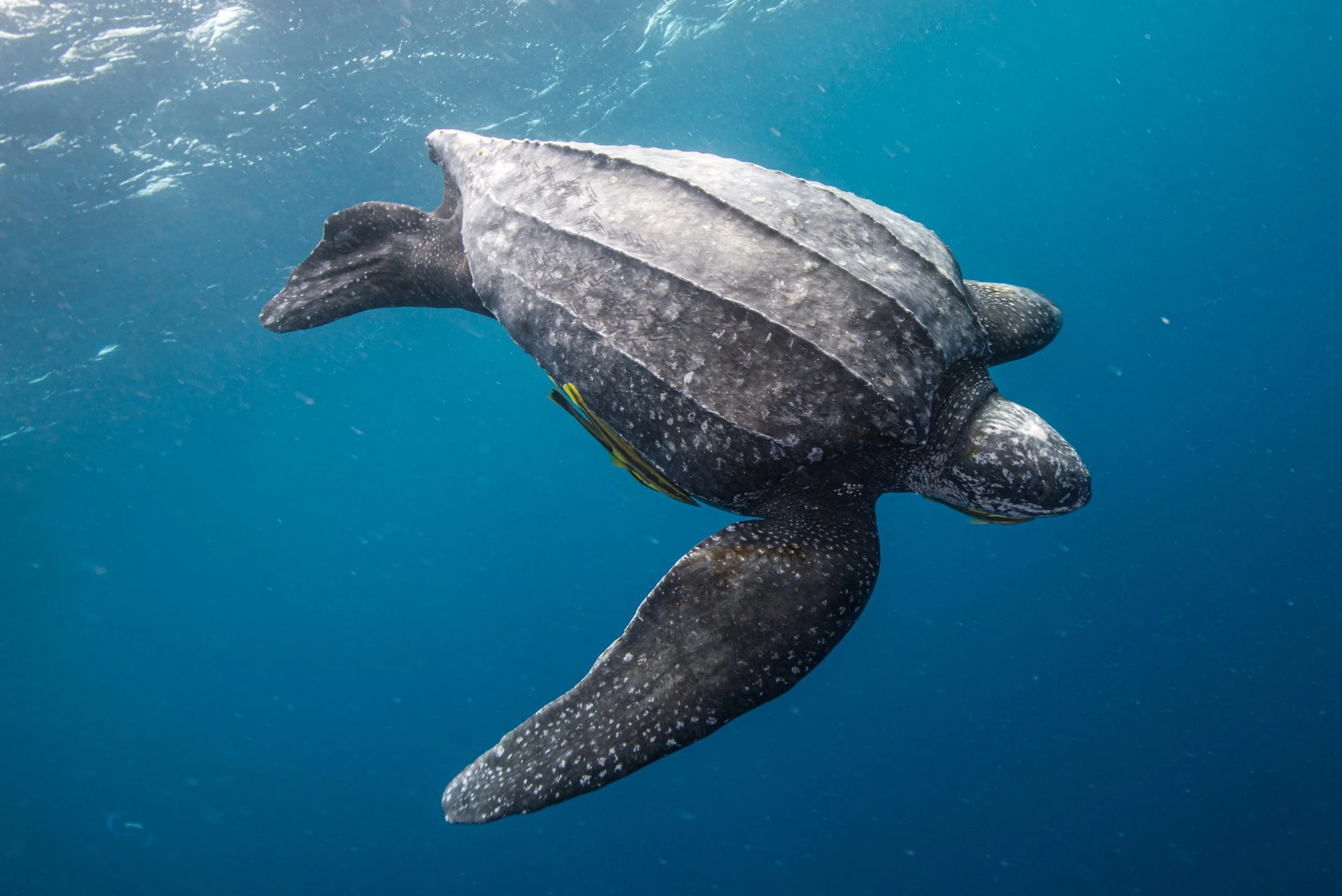
Photo by Jason Isley / Scubazoo
Raising awareness about leatherbacks and motivating people to take action is a key part of their protection. As Upwell's Executive Director, Dr. George Shillinger, explained: "By connecting people eye-to-eye with a life-sized turtle, the sculpture aims to spark empathy and inspire concrete actions to protect vital habitats." Beyond being a beautiful piece of public art, the sculpture serves as a lasting symbol of marine conservation and a shared commitment to protecting California's endangered wildlife.
So, if you live in the Avila Beach area, go say hello to your new neighbor! When you are ready to take action for leatherbacks, visit Upwell’s website.