
Unraveling the Mysteries of the “Lost Years”
Nearly 70 years ago, famed sea turtle biologist Dr. Archie Carr coined the term the “lost years” to describe the poorly understood period of time after hatchling sea turtles depart their natal beaches until they return to nearshore waters or nesting beaches as adults. For decades, we knew precious little about where juvenile sea turtles go to grow up.
Upwell is developing and deploying new technologies to finally shed light on these mysteries. Since 2020, we have worked with Lotek on development of prototype micro-satellite tags. Weighing less than a penny and specifically designed to fit juvenile sea turtles, these tags enable Upwell researchers to track juvenile turtles’ earliest voyages. The tags transmit data on the turtles’ locations and environmental conditions as they travel. We are learning how young turtles navigate across ocean basins and the habitats they seek out. With these important pieces of the “lost years” puzzle, we can design conservation measures to protect juvenile sea turtles during this poorly understood life history stage.
Learn more about how Upwell is unraveling the mysteries of the lost years by tracking juvenile turtles in Florida, Georgia, the Azores, the Cayman Islands, and South Africa:
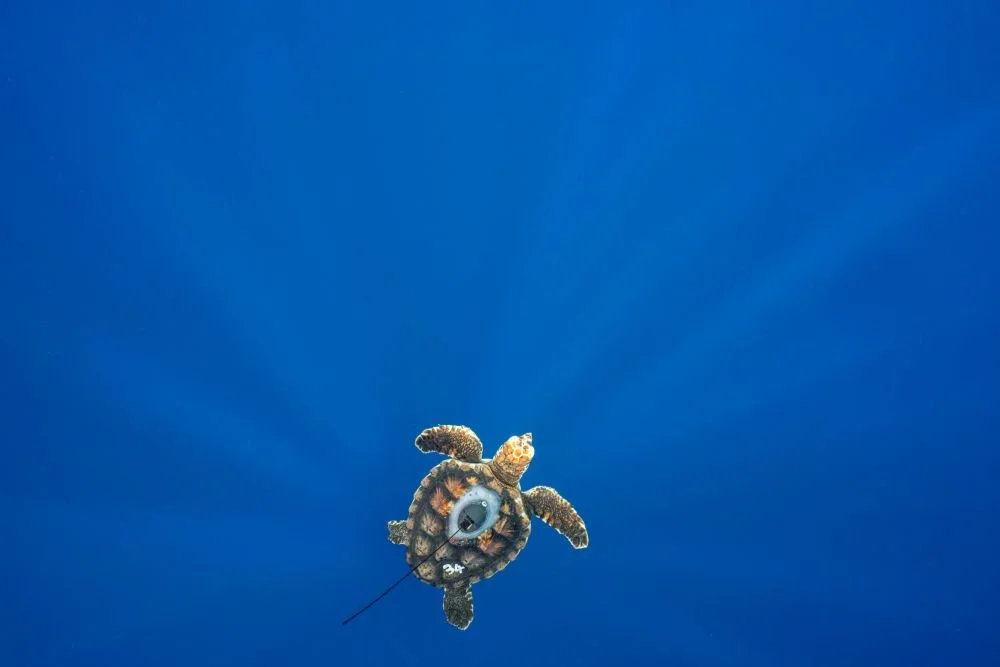
In January, a collaborative team of researchers from the Two Oceans Aquarium Foundation and Upwell motored out into the swift Agulhas Current — the southwest boundary current of the Indian Ocean that runs along the east coast of South Africa — and released 12 tiny loggerhead turtles, each fitted with a satellite tag on their carapace. This was the fourth release the team has conducted together, including one previous release in the Agulhas Current and two off the Cape of South Africa.

Much of the current telemetry data collected by tagging hawksbills is from adult females, due to the fact that they are easiest to tag when they crawl up the beaches to nest. To expand our knowledge of small juvenile hawksbill movements, Upwell teamed up with ProTECTOR, Inc., an organization with the goal of advancing our understanding of sea turtle biology and ecology through research throughout the coasts of Honduras. In early July the collaborative team tagged eight juvenile hawksbills with micro-satellite tags. The turtles were then released just off of the northeast reef of the Bay Islands, with some making impressive journeys.

Last year in July, we deployed 10 micro-satellite tags on juvenile loggerheads in partnership with the Aquarium La Rochelle in France. Of this cohort, all of which are named after European scientists, the tags on turtles Archimede, Nicolas Copernic and Charles Darwin have continued to transmit for an astounding 312 days and counting (a new record)! As we prepare to release another set of turtles, we wanted to take a moment to reflect on some of the observations from this first deployment, and how they help us to take the next steps in our research.

Six months ago, Upwell and Two Oceans Aquarium deployed micro-satellite tags on 12 loggerhead turtles rehabilitated at the Turtle Conservation Centre. We watched their progress with many questions and hypotheses. While it will take far longer than six months to answer any of these questions fully, we made some fascinating observations that allow us to ask even more questions!

In late October, a collaborative team of researchers from Two Oceans Aquarium Foundation and Upwell took a boat into the swift Agulhas Current, the southwest boundary current of the Indian Ocean that runs down the east coast of South Africa. There, they released 12 tiny loggerhead turtles with satellite tags attached to their carapace (top shells) in an effort to understand how these turtles are using this oceanic highway. See where these turtles have traveled over their first weeks in the ocean!

Upwell Turtles, the Okinawa Churaumi Aquarium, and the Sea Turtle Ecology Lab (STEL) have launched a partnership to explore the migratory ecology of the early life stages of loggerhead sea turtles.
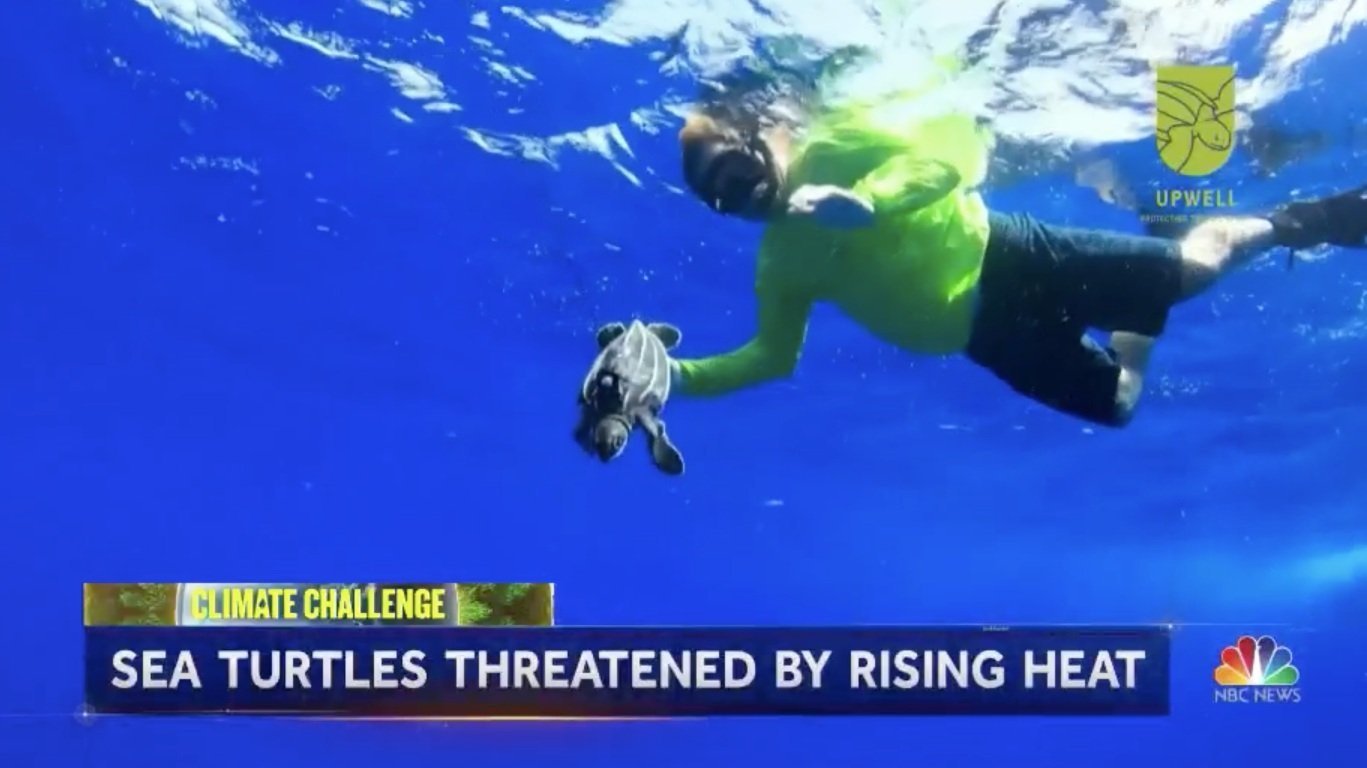
NBC News’ Kerry Sanders follows Upwell and Florida Atlantic University Marine Lab as they release juvenile sea turtles with micro-satellite trackers off the coast of Florida.
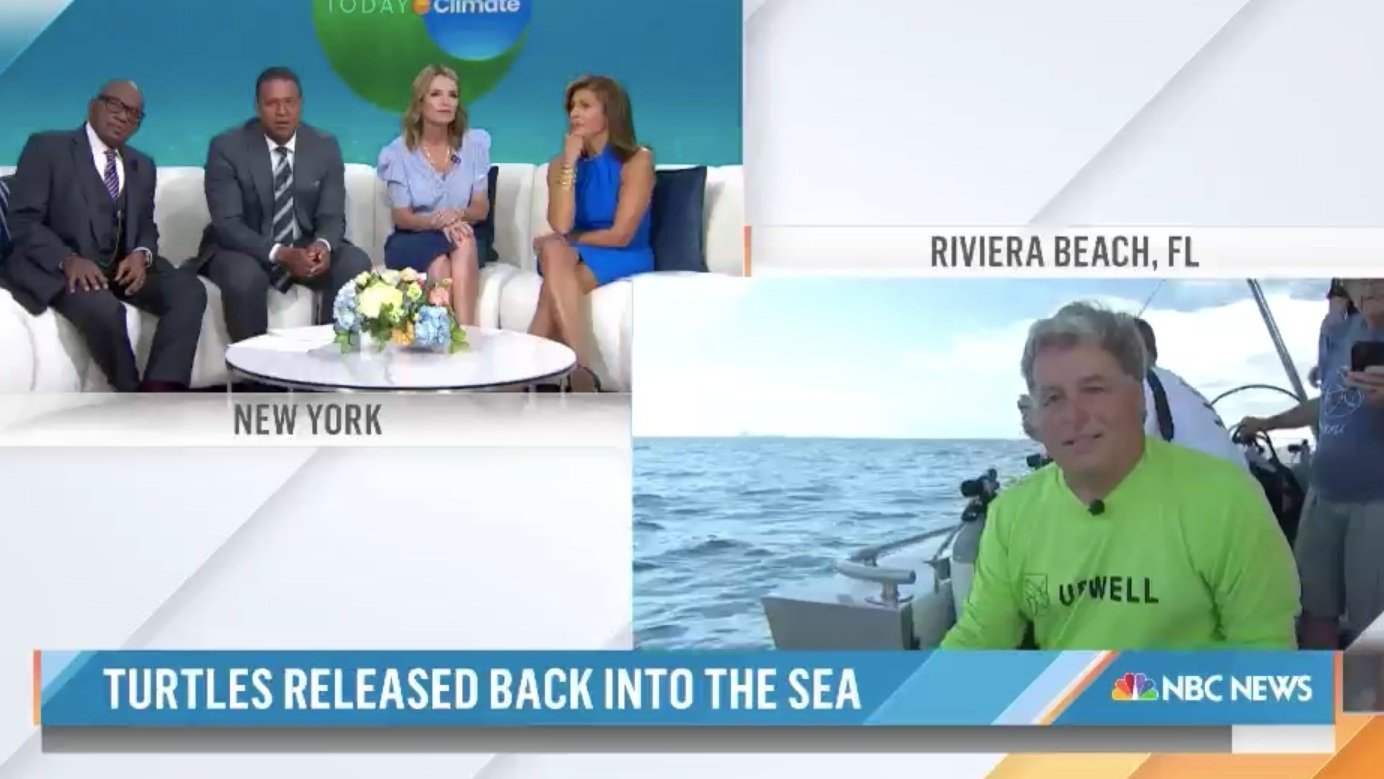
NBC News’ Kerry Sanders follows Upwell and FAU Marine Lab as they release juvenile sea turtles with micro-satellite trackers off the coast of Florida.
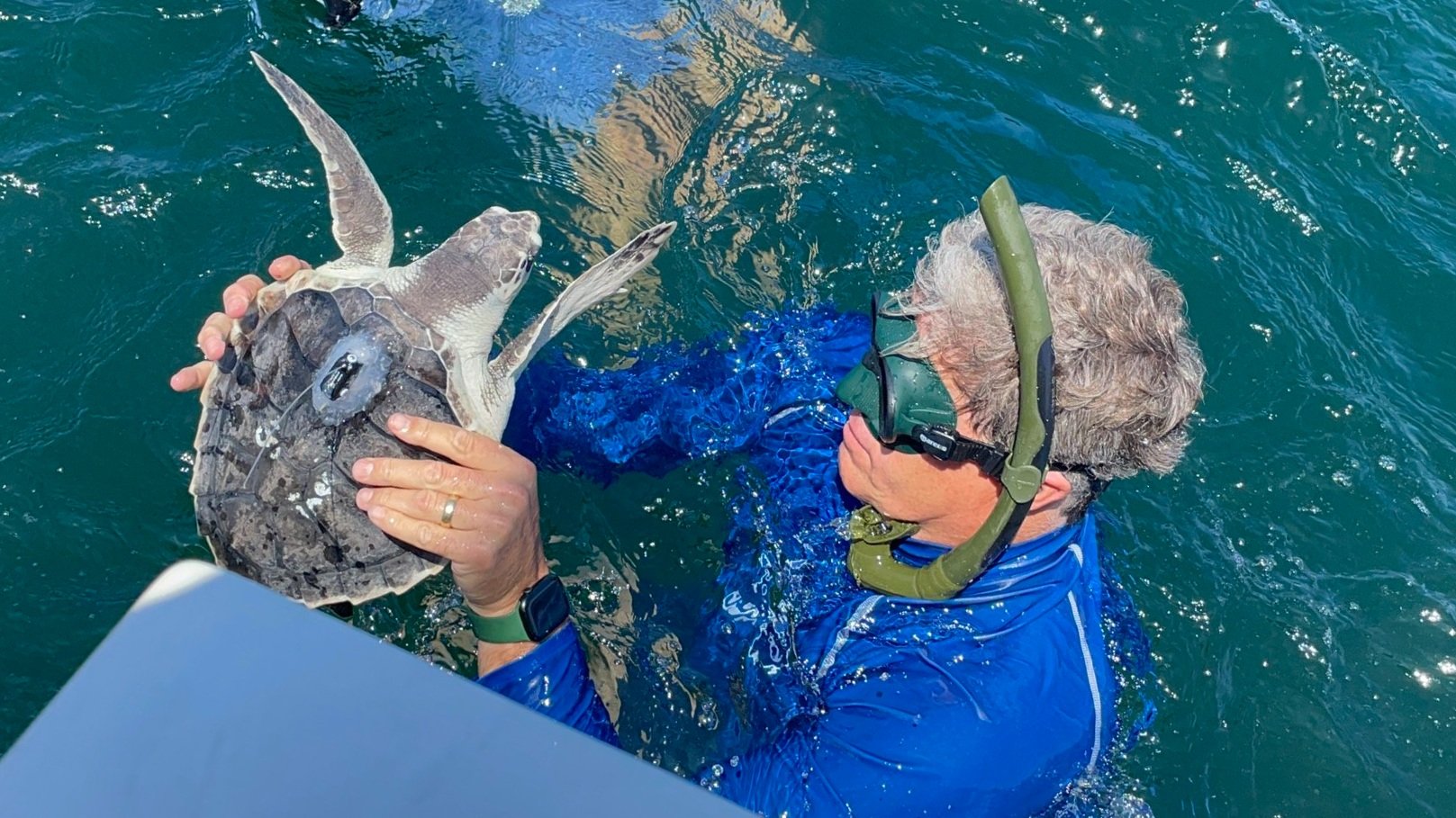
These 7 Kemp’s ridley sea turtles were cold-stunned in Cape Cod, MA, rehabilitated at the Georgia Sea Turtle Center thanks to Turtles Fly Too, The New England Aquarium, and The National Marine Life Center, and then tagged by Upwell before their release.
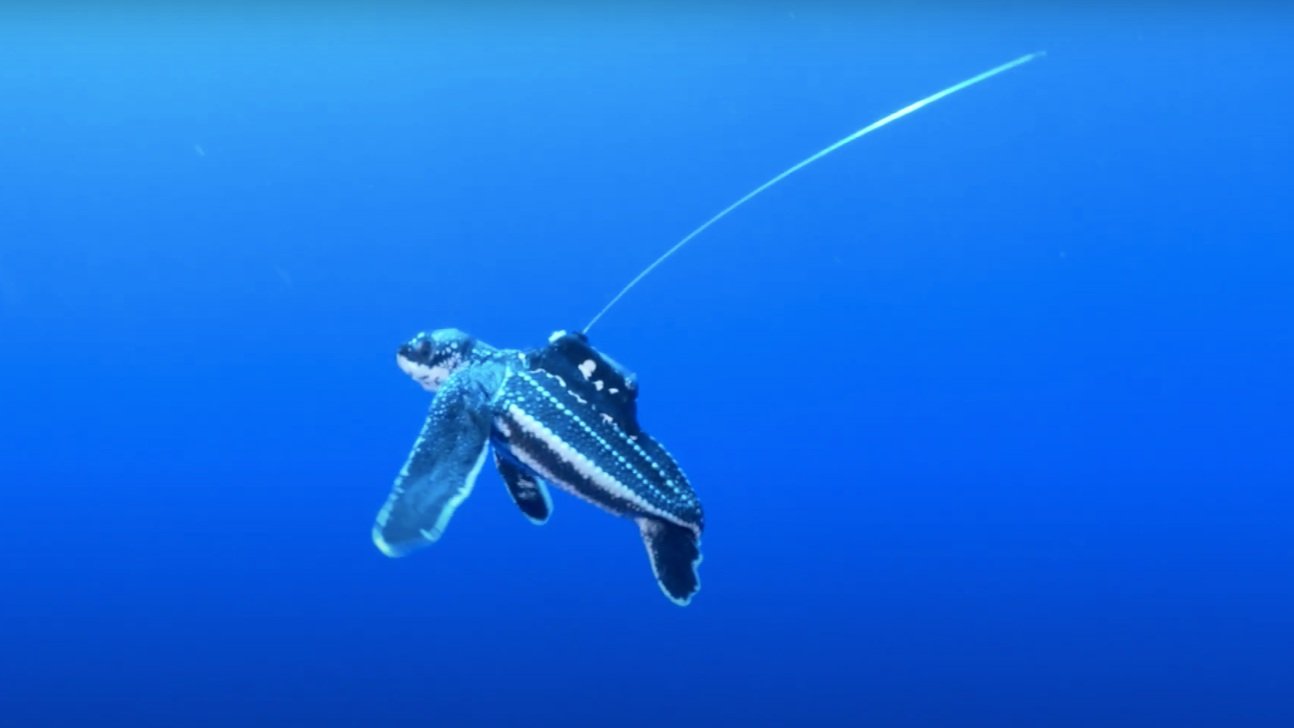
New technologies are finally shedding light on one of the greatest mysteries in sea turtle biology. Using prototype “micro-satellite” tags specifically designed to fit juvenile leatherback turtles, Upwell and Florida Atlantic University researchers released eighteen captive-reared juvenile leatherbacks off the coast of Florida and tracked their movements.
Acoustic/Folk Instrumental by Hyde - Free Instrumentals https://soundcloud.com/davidhydemusic Creative Commons —
Attribution 3.0 Unported— CC BY 3.0 Free Download / Stream: https://bit.ly/acoustic-folk-instrume...
Music promoted by Audio Library https://youtu.be/YKdXVnaHfo8
🎵 Track Info:
Title: Acoustic Folk Instrumental by Hyde - Free Instrumentals Genre and Mood: Country & Folk + Calm ——— 🎧 Available on: SoundCloud: https://bit.ly/SoundCloud-Acoustic ——— 😊
Contact the Artist: davidrhyde1@gmail.com https://soundcloud.com/davidhydemusic
Until recently, researchers were unable to conduct satellite tracking studies on juvenile turtles due to their small body sizes and immediate dispersal into the ocean, leaving this period of their lives enigmatic and often referred to as the “lost years.” A new study, “Pioneering insights into the diving behavior of early-stage sea turtles revealed by novel marine miniaturized satellite tags,” published in Scientific Reports in April 2026, provides the most comprehensive analysis to date of vertical diving behavior in early life stages of leatherback and loggerhead sea turtles.