
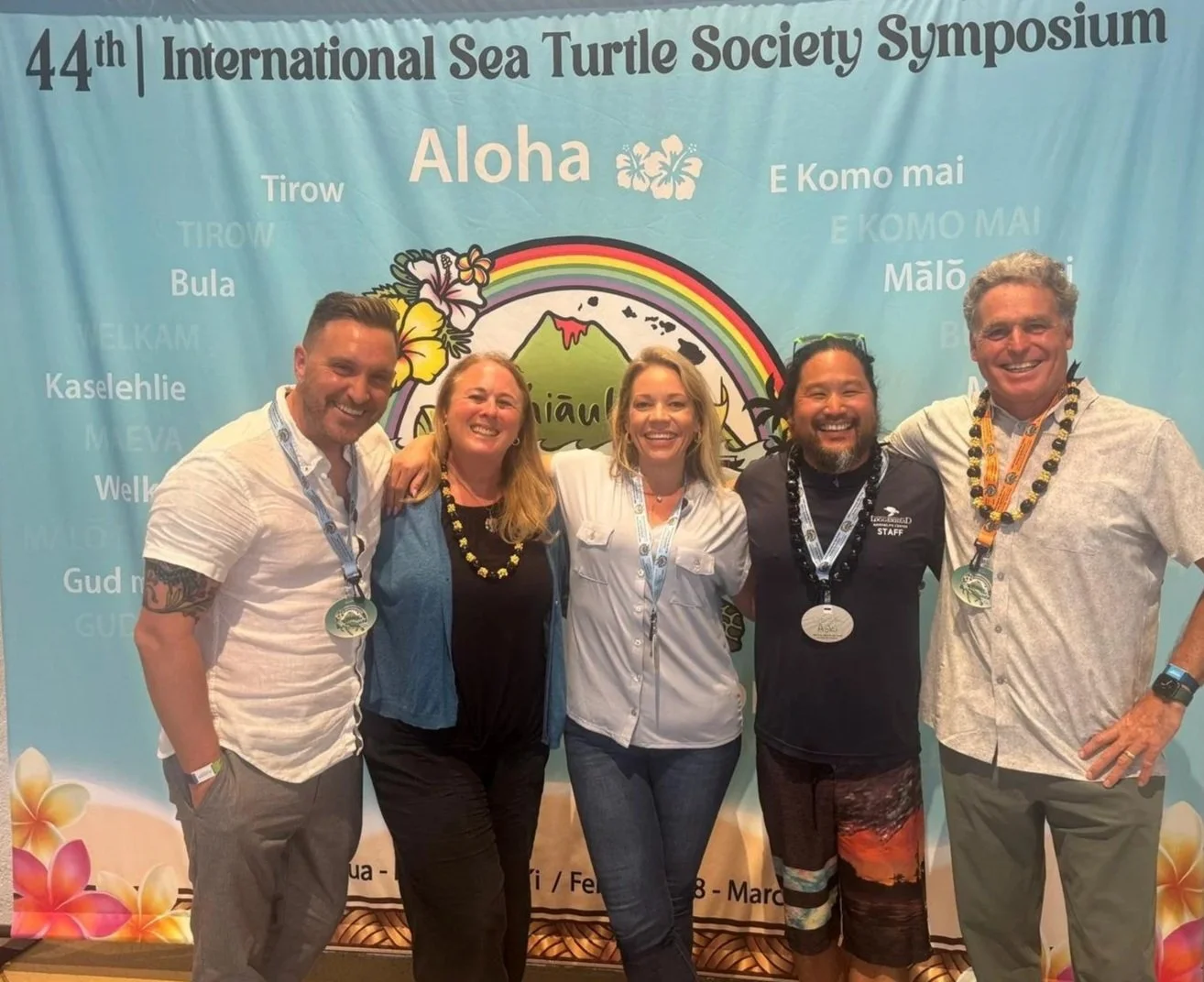
The 44th International Sea Turtle Symposium was hosted in Kona, Hawaii from February 28-March 6, 2026, with more than 700 participants from around the world. The Symposium is a unique opportunity for the sea turtle conservation community to come together and engage with complex and sometimes contested questions, and critically examine how sea turtle conservation is evolving in a rapidly changing world. As in past years, Upwell Researchers were excited to participate.
Prior to the conference, Upwell helped facilitate a workshop introducing the “Pacific Bycatch Hub,” a decision-support tool designed to support innovative conservation approaches for Pacific leatherback sea turtles. Upwell Executive Director, Dr. George Shillinger opened the workshop, which was subsequently facilitated by Upwell Researcher Anna Ortega. The Hub integrates fisheries bycatch data with population models to help researchers, managers, and conservation practitioners better understand when and where leatherbacks face the greatest risk.
To build the tool, Upwell Researcher Anna Ortega built upon her multi-language systematic review of grey and academic literature to quantify leatherback mortality in Pacific fisheries, synthesizing information from a wide range of sources across the region. These data now inform the Hub’s analytical framework, allowing users to explore spatial and temporal maps of fisheries risk and informing population viability analysis models that show how different management strategies may influence future leatherback population trends. While the current version focuses on Pacific leatherbacks, the methods behind the platform are replicable, and we hope to expand it to other populations and species affected by fisheries bycatch.
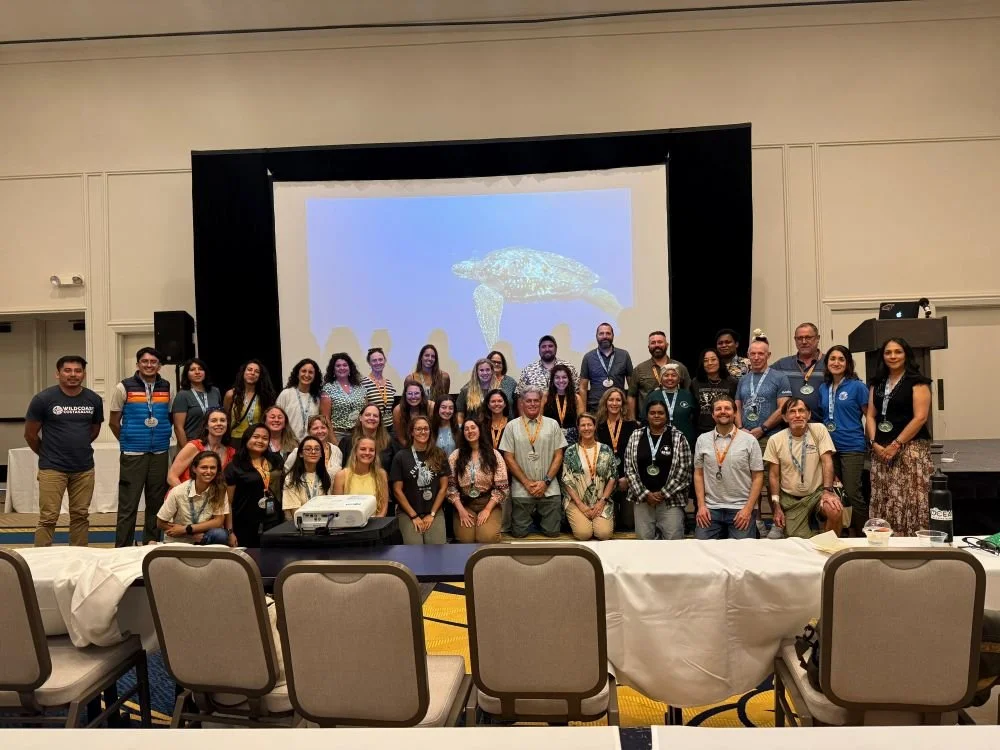
The Pacific Bycatch Hub Workshop at ISTS 2026
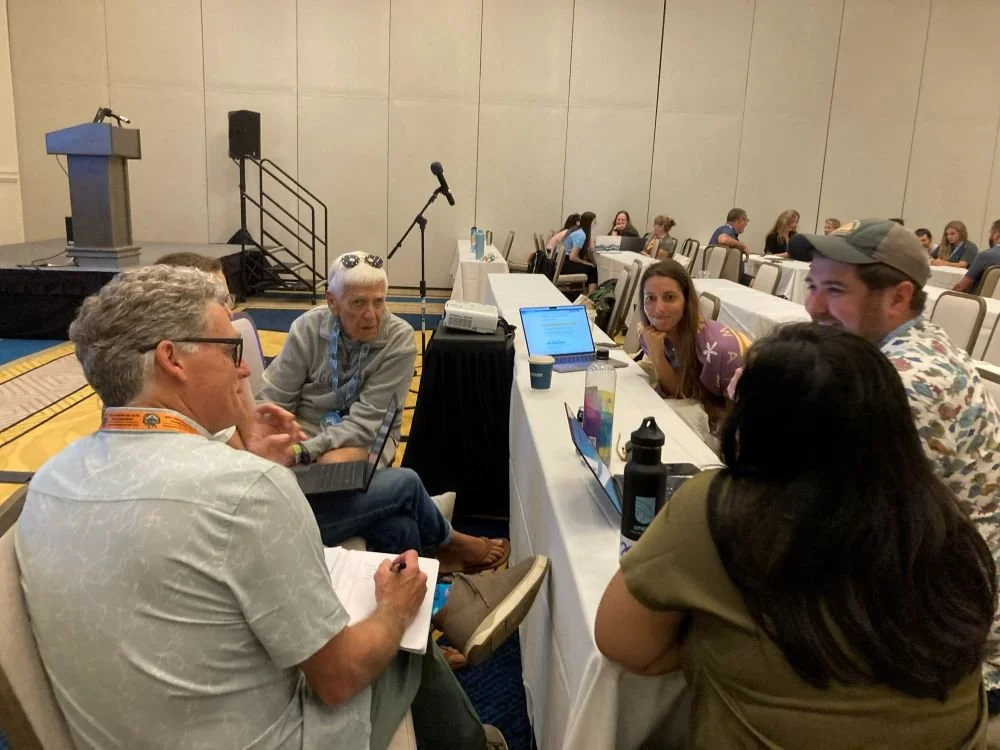
Upwell Executive Director Dr. George Shillinger participated in a Plenary session titled “Head starting Revisited: Effectiveness, Ethics, and Evidence.” George assisted the facilitators with designing the plenary agenda and identifying speakers with the aim to highlight the potential efficacy of ex situ measures such as head starting as a stopgap to prevent the extinction of imperiled sea turtle populations while allowing longer-term measures (e.g. bycatch reduction) take effect. During the Q & A, George also answered questions about funding for such conservation efforts, stressing that ex situ and in situ measures are not in competition, rather there is an opportunity to “build a bigger pie” of funding resources so that both methods are complementary and mutually reinforcing.
George also served as one of several co-chairs for four sessions in “In-Water Biology,” focused on the ecology, behavior, and foraging habits of sea turtles within their marine habitats. During these sessions, Upwell Researcher Tony Candela presented “Protecting the early life of eastern pacific leatherback sea turtles by combining new satellite tracking technologies and numerical modeling”. This study, which is part of his PhD dissertation, simulates leatherback hatchling dispersal from Playa Grande (Costa Rica) using the Sea Turtle Active Movement Model (STAMM) to explore knowledge gaps around their habitat use in early life history stages. Tony found that the diving behavior of young turtles enables them to access subsurface currents, which in turn strongly influences their trajectories and large-scale dispersal.
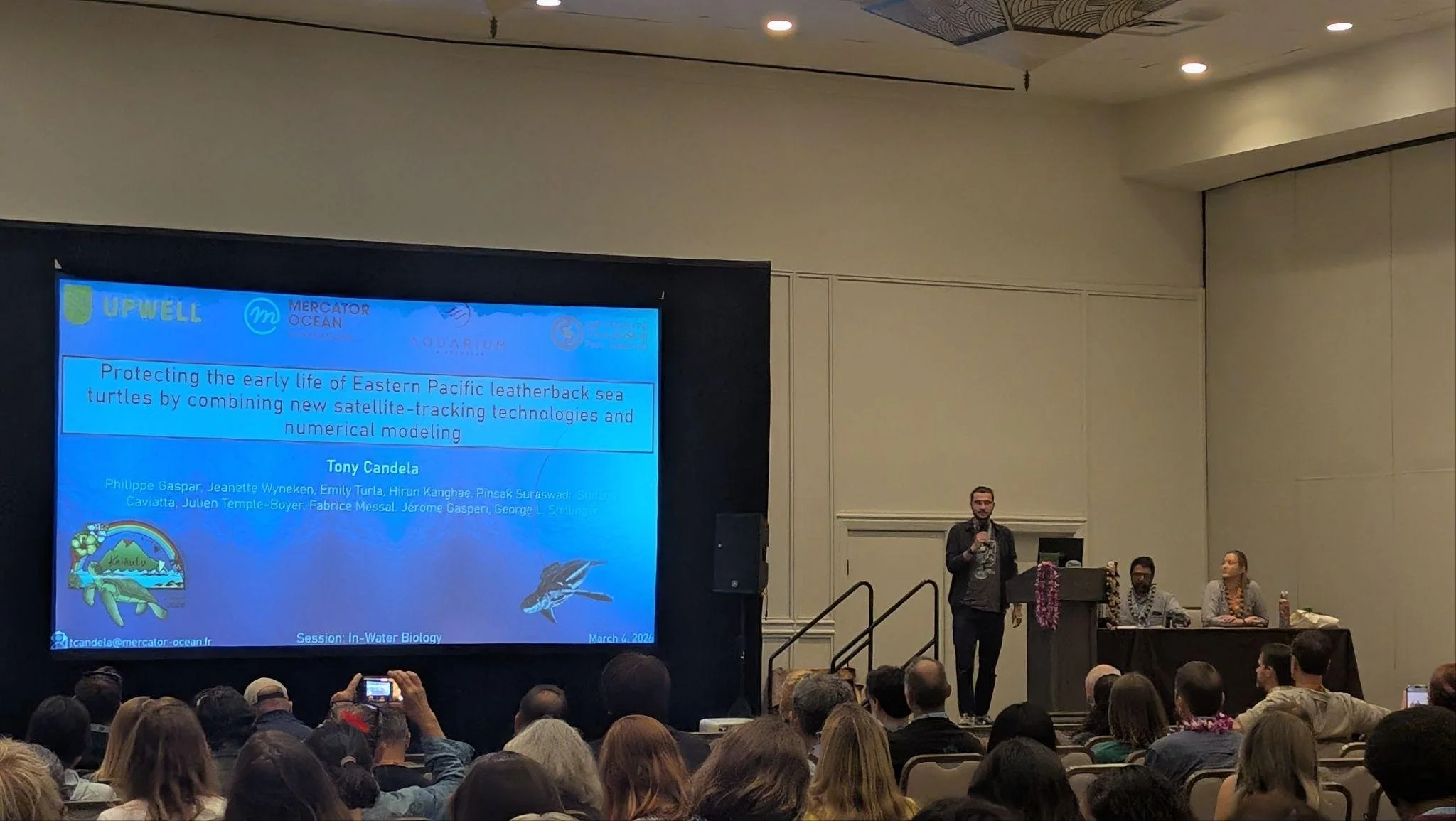
Upwell Researcher Tony Candela presented “Protecting the early life of eastern pacific leatherback sea turtles by combining new satellite tracking technologies and numerical modeling”.
Upwell Researcher Derek Aoki also presented a talk during the In-Water Biology session titled “Investigating foraging site fidelity of nesting leatherback sea turtles (Dermochelys coriacea) on Juno Beach, Florida”. This study re-tagged leatherbacks with known foraging histories to provide insight into their foraging site fidelity and habitat use over time. Although habitat use varied across years for some turtles, Derek observed a consistent link between the southeastern Florida nesting aggregation and distinct foraging areas. Also presenting during the In-Water Biology sessions was Upwell research collaborator and University of Florida doctoral candidate, Renato Bruno.
Upwell Wildlife Veterinarian Dr. Heather Harris helped organize the 15th Sea Turtle Rehabilitation Workshop with international colleagues. The workshop had 90+ registered participants from 23 countries and was packed with expert speakers and interactive case discussions on topics like trauma management, antibiotic use, and holistic therapies. The workshop aimed to generate constructive dialogue, encourage problem-solving, and support the dissemination of cutting-edge clinical techniques, helping to raise the global standard of care.
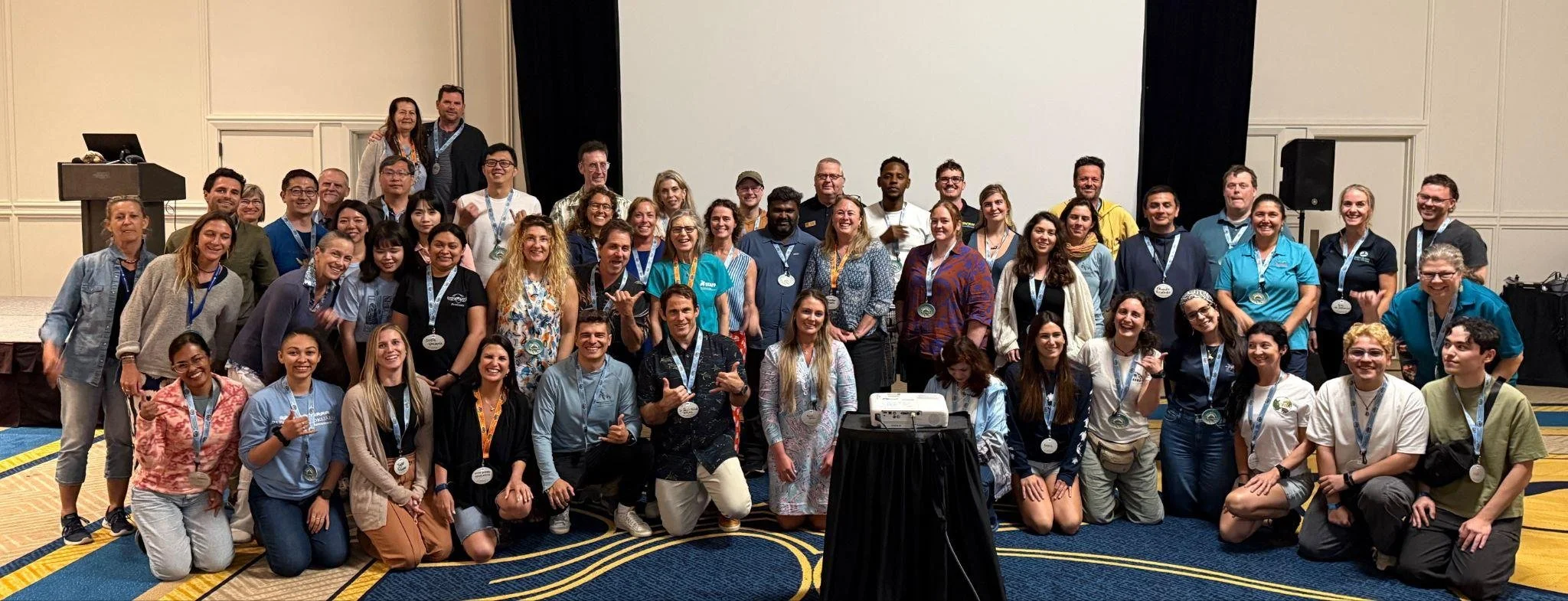
Rehabilitation workshop participants
Heather also served as session chair for the 3rd Veterinary medicine scientific session, and presented her research with Upwell on assessment of body condition in leatherback turtles. The session had a great lineup of talks and was well attended, indicating a growing interest within the sea turtle community.
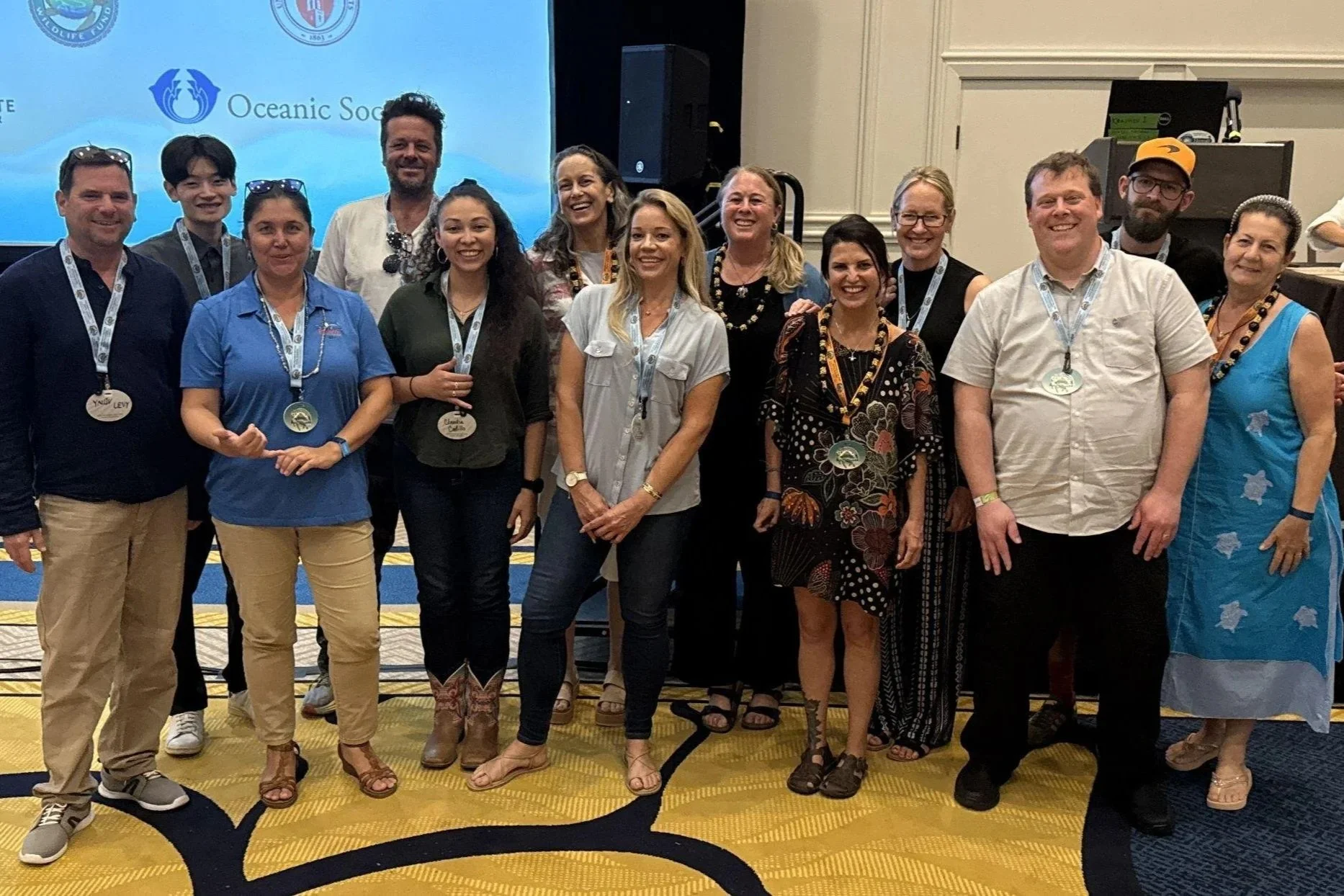
The speakers and session chairs of the 3rd veterinary scientific session.
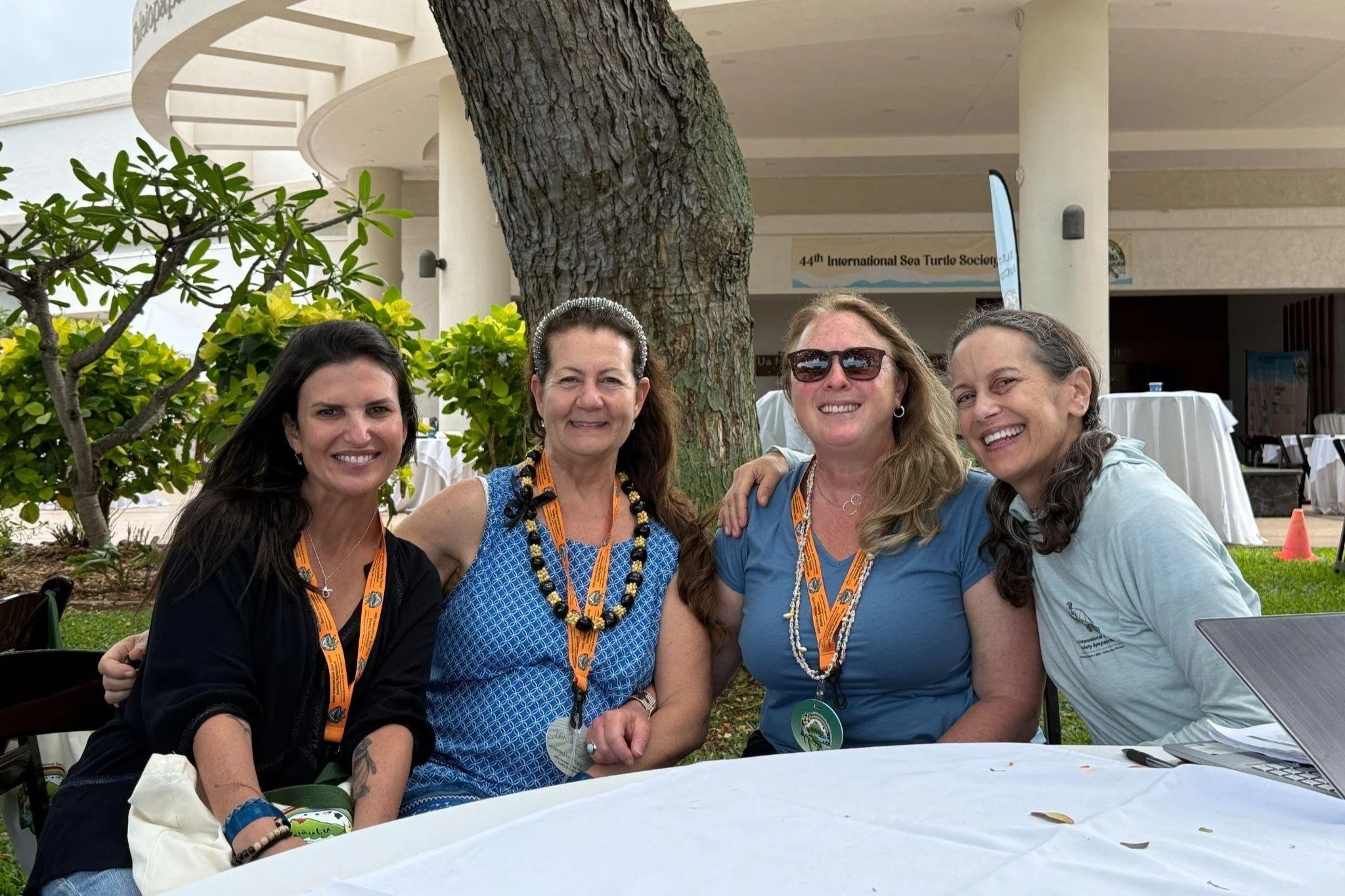
Organizing team of international veterinary professionals from Italy, Brazil, and the US.
She looks forward to working together with this international team of veterinary professions to organize the rehabilitation workshop and veterinary scientific session at the next ISTS in South Africa.
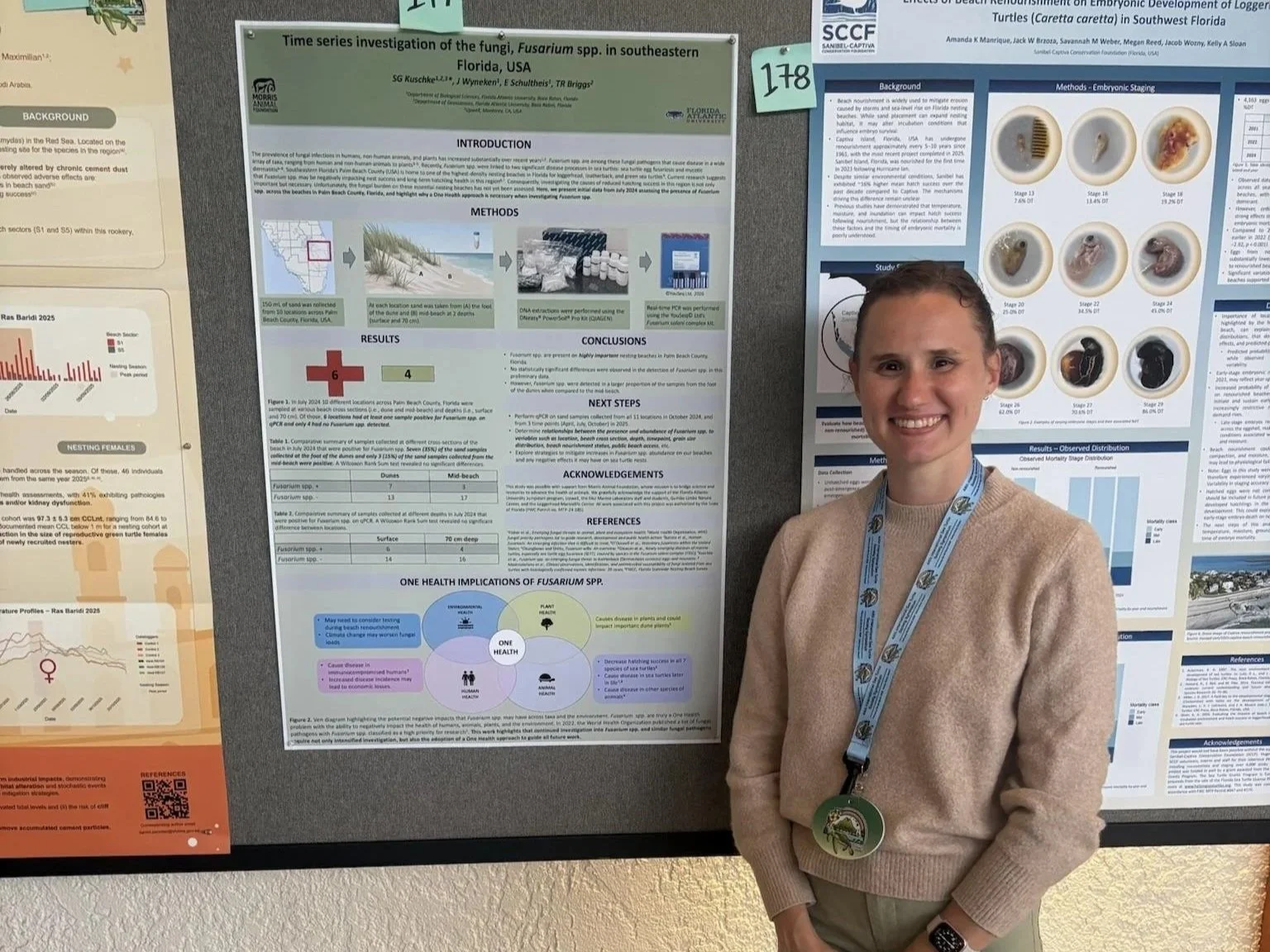
Upwell Laboratory Veterinarian, Dr. Sam Kuschke, gave a presentation on “Impacts of in situ versus ex situ incubation on the skin microbiota of leatherback sea turtles” and presented a poster on “Time series investigation of the fungi, fusarium spp in Southeastern Florida, USA.”
We thank the International Sea Turtle Society and organizers for creating this opportunity to exchange knowledge and ideas, and to everyone on our team, our collaborators, and participants doing exceptional work in sea turtle research and conservation.