

Until recently, researchers were unable to conduct satellite tracking studies on juvenile turtles due to their small body sizes and immediate dispersal into the ocean, leaving this period of their lives enigmatic and often referred to as the “lost years.” A new study, “Pioneering insights into the diving behavior of early-stage sea turtles revealed by novel marine miniaturized satellite tags,” published in Scientific Reports in April 2026, provides the most comprehensive analysis to date of vertical diving behavior in early life stages of leatherback and loggerhead sea turtles.
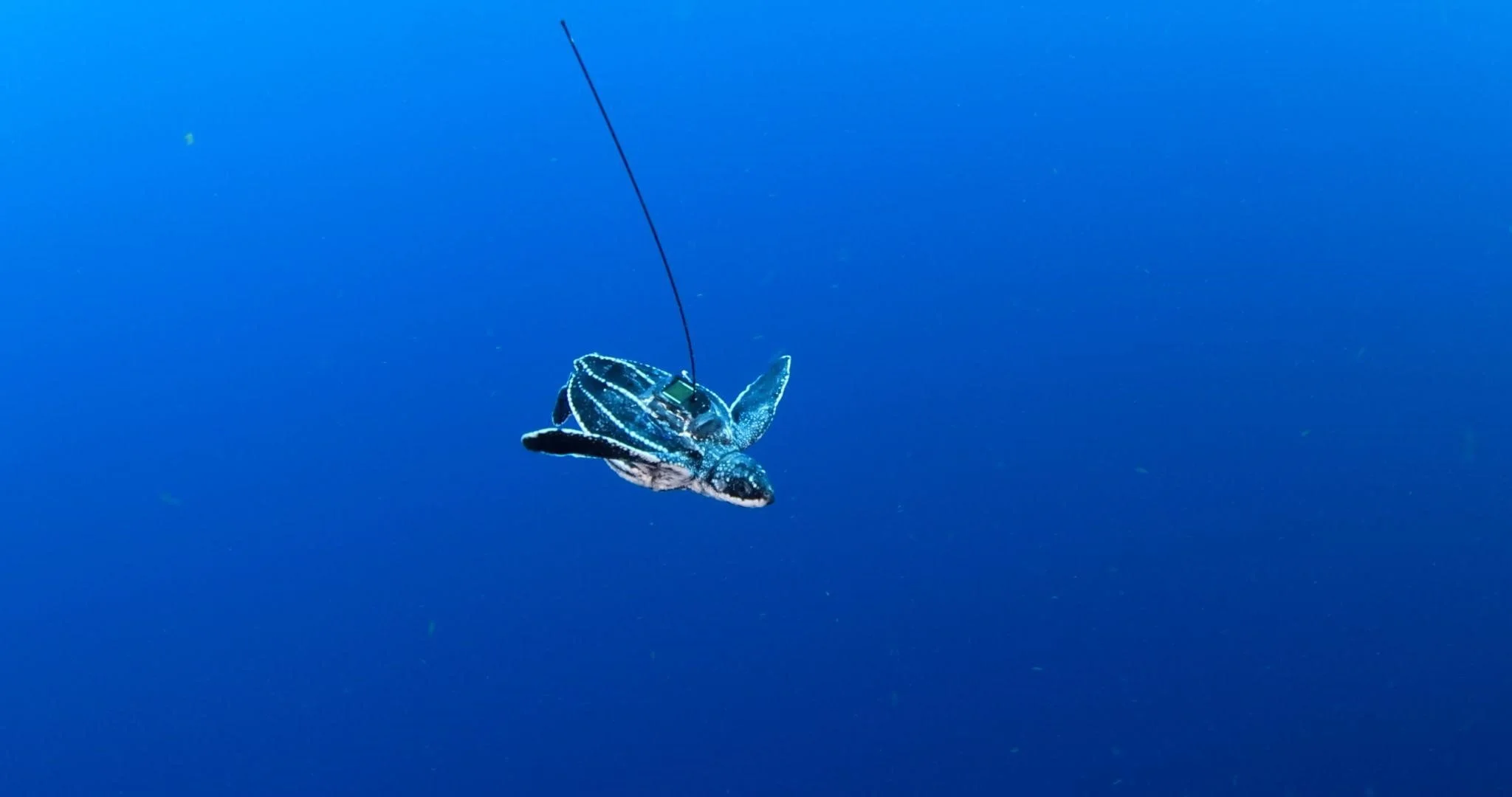
This study is part of Upwell’s Lost Years’ Initiative, an international, collaborative effort to explore the promise of new tag miniaturization technologies and their potential to reveal the “lost years” period of sea turtle life history. Upwell Executive Director Dr. George Shillinger says, “We are excited to see this unique global research collaboration yield findings that are shedding light on this enigmatic and vulnerable sea turtle life history phase. We aim to see these findings applied to management and conservation outcomes that work to protect sea turtles throughout their life histories.“
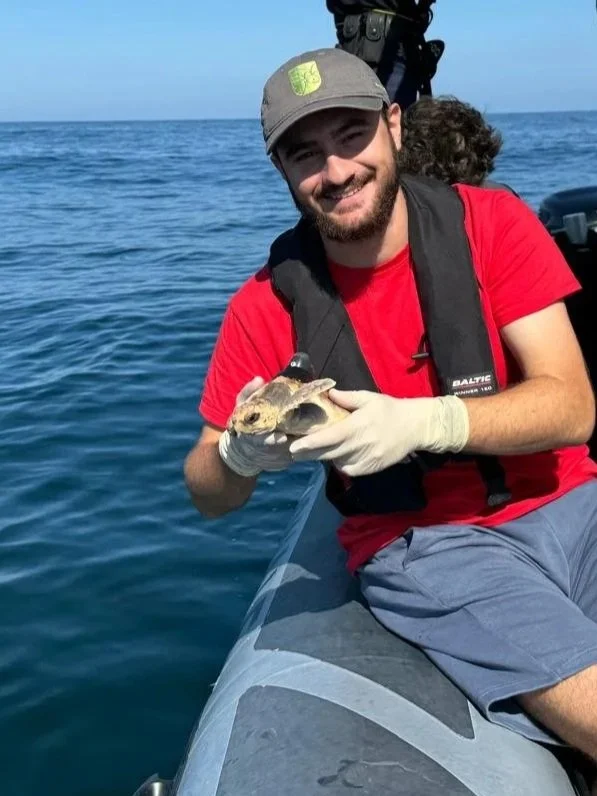
The manuscript is lead-authored by Tony Candela, Oceanographer and Marine Ecosystem Modeler for Upwell, Mercator Ocean International, and for the Centre d'Etude et de Soin des Tortues Marines (CESTM) of the Aquarium of La Rochelle. Tony is also a PhD student at the University of Toulouse in France. Tony reflects on his work, saying, “I have always aspired to play a role in marine conservation and was looking for ways to leverage my knowledge of ocean physics to contribute. This study was the perfect way to align my background with my values.”
Using over 2,400 daily records from 71 individuals equipped with miniaturized satellite tags across multiple ocean basins, analyses revealed a clear ontogenetic progression. As a turtle’s size increases, they dive deeper and longer, with increasingly structured use of the water column. Understanding how these early-stage sea turtles interact with their environment in three dimensions provides an important ecological context for their migratory and survival strategies.
The insights from this study can help improve our capacity to predict juvenile sea turtle movements in the open ocean and identify potential overlaps with human-created threats. This knowledge on diving patterns provides a basis for conservation actions, for example, by informing the adjustment of fishing gear deployment depth, and the design of marine protected areas that reflect the vertical habitat use of these species.
This manuscript was produced by a collaboration between 17 institutions from seven different countries. The international team includes Upwell, Mercator Ocean International, Aquarium La Rochelle, Centre d’Etudes et de Soins pour les Tortues Marines, Blue Wave Consulting, LLC, FAU Marine Science Laboratory, Department of Biological Sciences, Charles E. Schmidt College of Science, Florida Atlantic University, Two Oceans Aquarium Foundation, Nelson Mandela University, Department of Marine and Coastal Resources, Phuket Marine Biological Center, Marine and Coastal Resources Research Center (Upper Andaman Sea), Sea Turtle Ecology Lab, Okinawa Churashima Foundation, Okinawa Churaumi Aquarium, Institute of Marine Sciences, IICM Okeanos, University of the Azores, Institute of Marine Research, IMAR, Rotterdam Zoo, Rotterdam, Zoomarine Algarve, Mundo Aquatico SA