
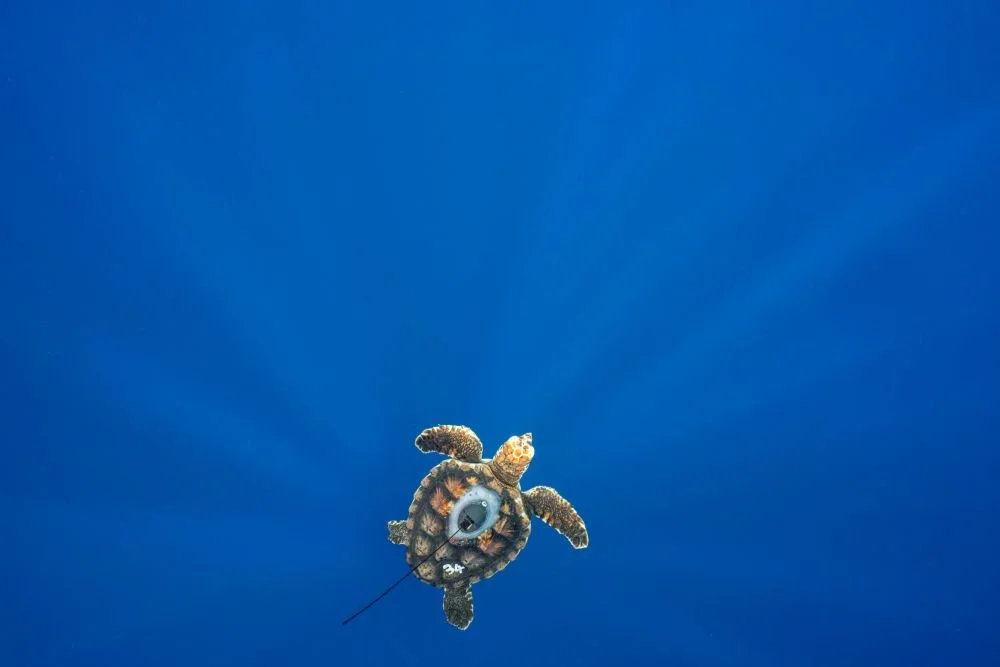
In January, a collaborative team of researchers from the Two Oceans Aquarium Foundation and Upwell motored out into the swift Agulhas Current — the southwest boundary current of the Indian Ocean that runs along the east coast of South Africa — and released 12 tiny loggerhead turtles, each fitted with a satellite tag on their carapace. This was the fourth release the team has conducted together, including one previous release in the Agulhas Current and two off the Cape of South Africa.
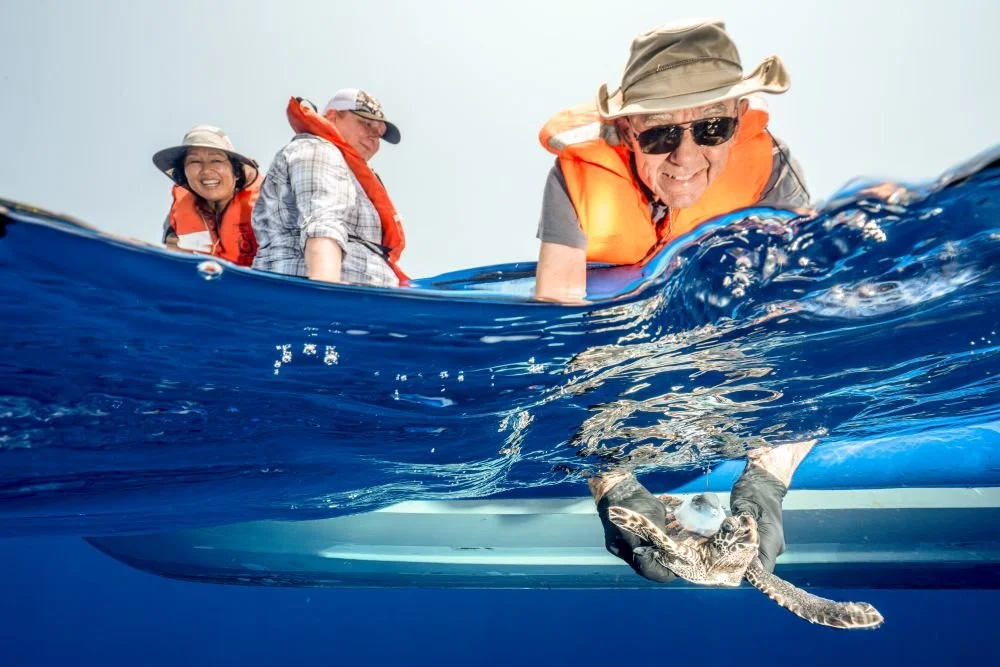
Photo by Linda Ness
Photo by Linda Ness
These releases are giving us insight into two big unknowns: How these small turtles use their ocean habitat and how rehabilitated turtles fare once they are returned to the wild. While firm conclusions will require additional releases and a larger dataset, initial observations can be quite interesting.
When looking at tag data, it is important to remember that a tag that stops transmitting does not necessarily mean a turtle has passed away or been predated. In some cases, it is possible to infer from the data that a tag ran out of battery or became biofouled. However, when a tag suddenly goes silent, the cause could be anything from tag detachment, predation, or another unknown cause. With that in mind, we will look at the two releases in the Agulhas Current below.
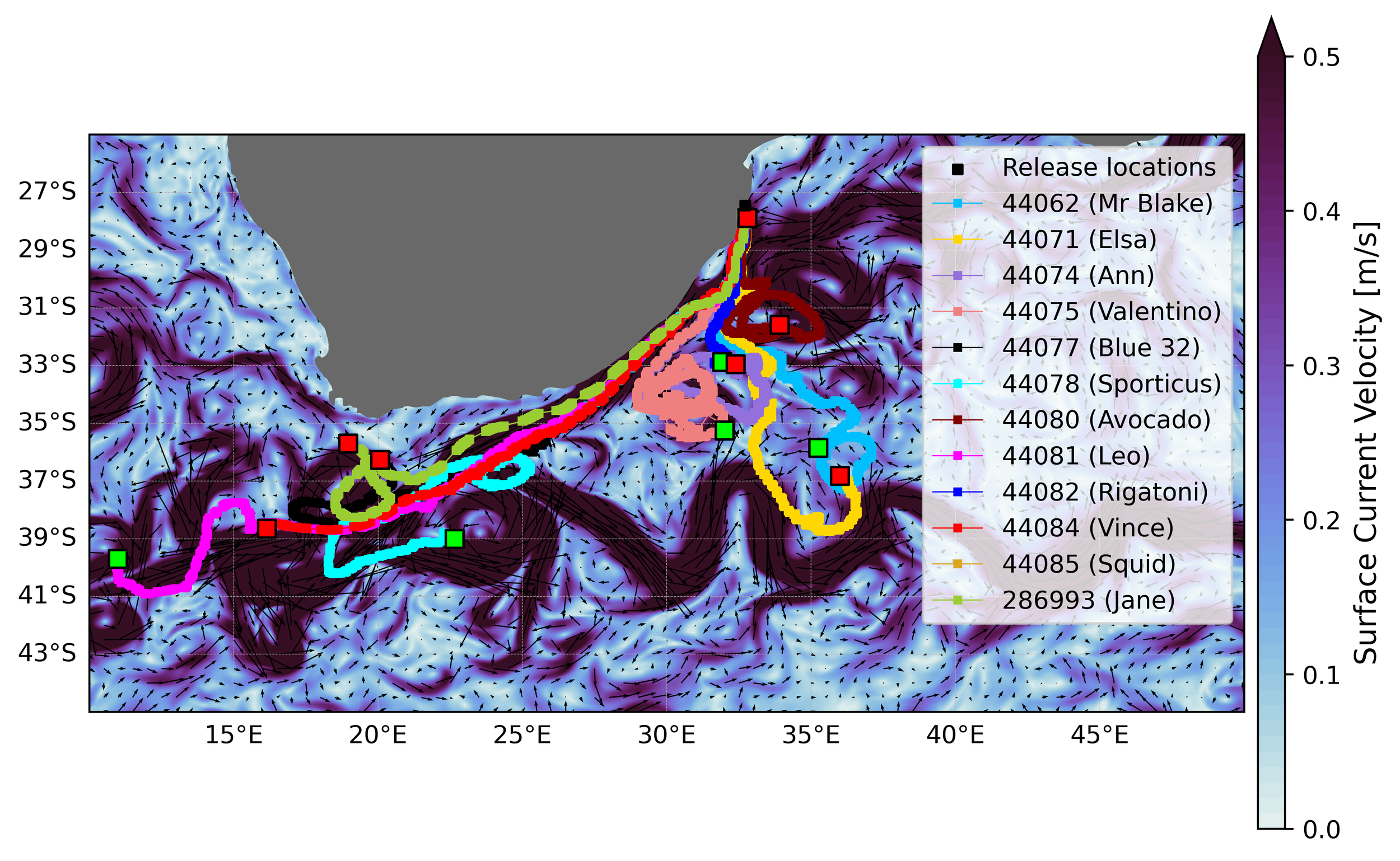
January 25th, 2026, to April 2, 2026: 67 days
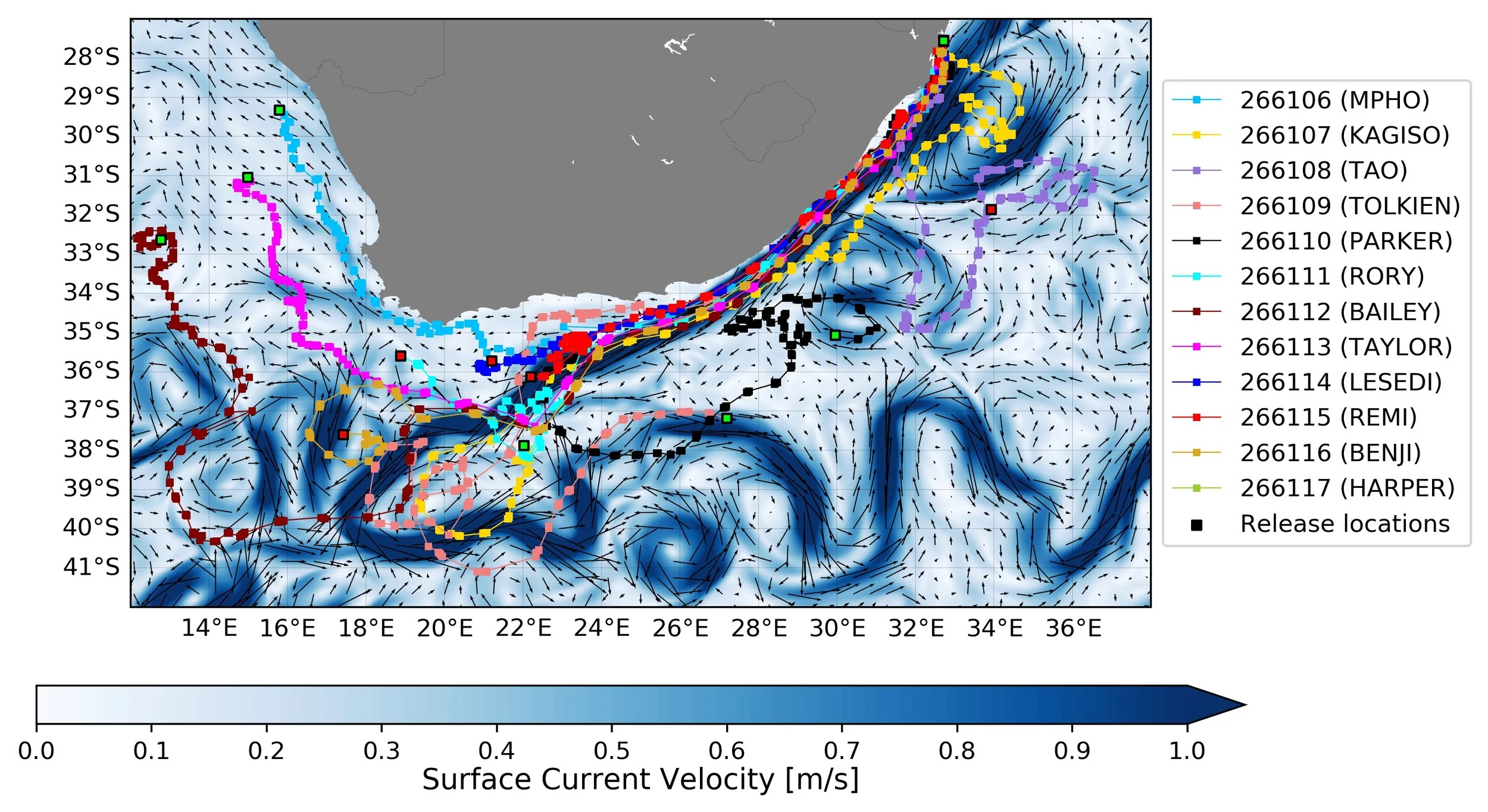
Oct 21st, 2024 to Jan 2, 2025: 73 days
In our January release, six of the turtles split from the Agulhas Current soon after release, meandering east from South Africa (Valentino, Ann, Elsa, Mr Blake, Avocado, Rigatoni), while only two turtles did so in the initial set (Kagiso, Tao). In the initial release, three turtles were already advancing up the West Coast of South Africa at the 73-day mark, whereas no turtles from the most recent set are currently doing so at 74 days, though Leo could be moving in that direction.
The differences between the turtles’ movements are a good example of why a large data set is needed to establish patterns. The first set of turtles might lead us to believe that juvenile turtles are headed to the Atlantic Ocean, while the second set seemed to spend more time in the Indian Ocean. Looking at only a few turtles gives us an incomplete picture of species trends as a whole, and only through further releases can we get the full panorama.
As tracking technology continues to improve and tag longevity increases, taking that next step is becoming more achievable. With each release, we refine our methods and sharpen our research questions, inching closer to the answers that matter. We are planning more releases at these same locations to continue building our datasets — and we can't wait to see what the turtles show us next!
Photo by Linda Ness