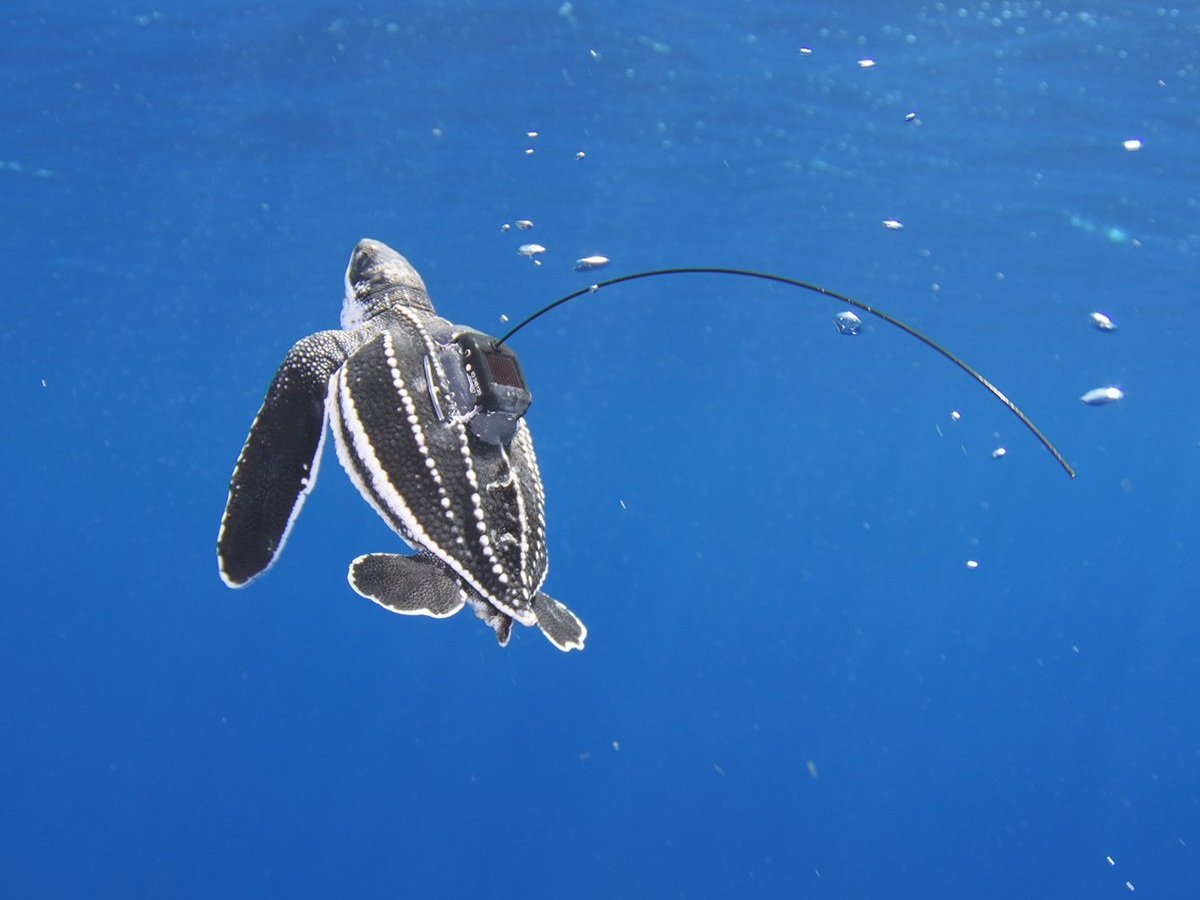
At Upwell, we’re always seeking new ways to mobilize data to power sea turtle conservation—but sometimes data is scarce or doesn’t exist. Predictive models can help us fill in data gaps by using algorithms to explore what we can’t observe directly in the wild through monitoring or tagging. “I’m a big proponent of using models to answer questions that are hard to tackle in the field.” Says Upwell Researcher Anna Ortega. Anna recently created a model that can be used to simulate how changes in ocean temperature and food availability affect a leatherback’s ability to grow and reach reproductive size.
First Leatherback Tagged in the California Current Since 2022
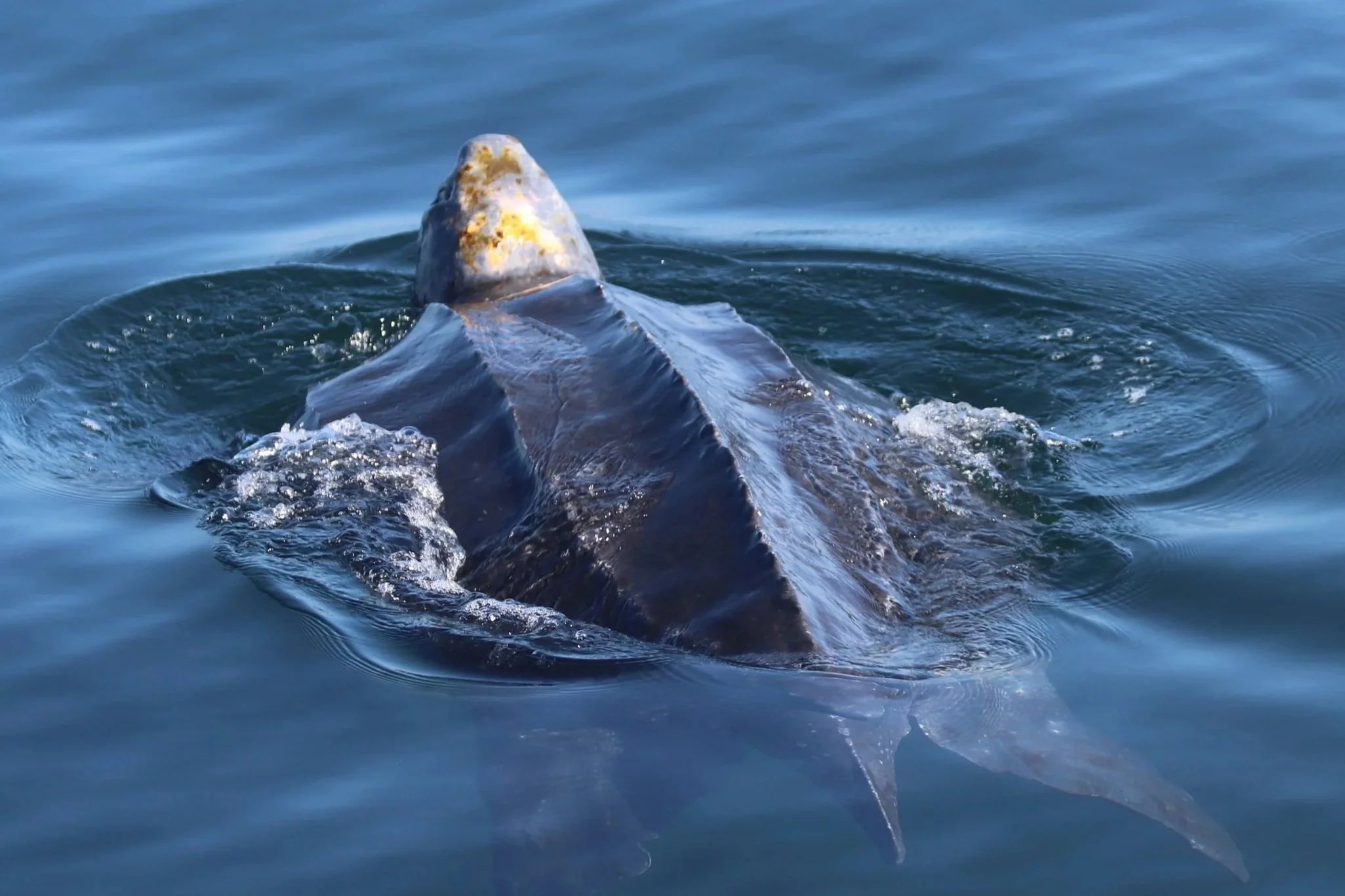
In September 2025, the collaborative Upwell and NOAA leatherback monitoring team tagged our first leatherback in the California Current since 2022! The adult male leatherback weighing 438 kg (almost 1,000 pounds) was fitted with satellite and acoustic tags to collect critical data on movements and habitat use. Read more about what Ricky has been up to since he was tagged in September.
Algorithm Magic: Predicting Leatherback Presence in the California Current
Nerea Lezama-Ochoa is a marine biologist working as a UCSC project scientist at the NOAA Environmental Science Division in Monterey. Her team is producing daily projections of suitable habitat for 10 highly migratory species (including leatherback sea turtles). Read Nerea’s blog about how these projections are created with accuracy and why they are helpful to conservation efforts.
Aerial Surveys Result in One-of-a-Kind Finds
Why the High Seas Treaty Is Important to Sea Turtles
Most sea turtle species migrate and spend large amounts of their life history in areas of the ocean considered “high seas.” The high seas are the parts of the ocean that are not under the jurisdiction of any nation. In June of 2023, after almost two decades of negotiations, UN Member states adopted the Biodiversity in Areas Beyond National Jurisdiction treaty (also known as the High Seas Treaty) to provide a coherent and holistic framework for protecting the high seas. Earlier this month, Upwell Executive Director Dr. George Shillinger attended the High Seas Treaty symposium to learn more about how its implementation may impact sea turtle populations and to seek opportunities to further the protection of turtles at sea.
Press Release: Novel Research Takes Marine Conservation Tools to a New Dimension
Using Machine Learning to Understand Turtles’ Lives at Sea
What does a researcher studying animal behavior do when the animal they are studying takes off into the middle of the Pacific ocean? In this post, Upwell Researcher Dr. Nicole Barbour breaks down how machine learning can be used to help researchers interpret data from tagged leatherbacks to understand their behavior at sea. Featured image by Juergen Freund.
Notes From The Field: Monitoring Florida’s Leatherbacks
At the beginning of June, Upwell Executive Director George Shillinger traveled to Juno and Jupiter beaches in Florida to catch the end of the leatherback nesting season monitoring conducted at Loggerhead Marinelife Center (LMC) and participate in ongoing collaborative research projects. Read more about those projects and meet some of the leatherbacks that were monitored this season!
More Nausea and Curiosity: A research assistant monitoring West Pacific leatherbacks in the California Current
Meeting your Heroes in a Virtual World
Princeton student Max Gotts recently attended the virtual 40th Annual International Sea Turtle Symposium (ISTS) for the first time to present his research on nearshore mortality’s role in leatherback hatchling evolution. In 2018, Max worked with Upwell Researcher Nicki Barbour in Costa Rica tracking leatherback hatchlings. Find out more about his research and experience at ISTS.